Gardener Hayes — Recycling and Sustainability for a Greener Garden
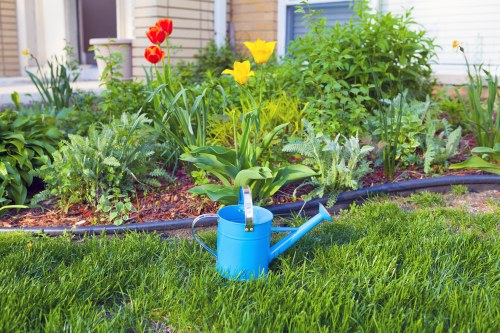 At Gardener Hayes we design and maintain an eco-friendly waste disposal area and a sustainable rubbish gardening area that serve both clients and the wider neighbourhood. Our approach balances practical garden waste handling with long-term carbon reduction goals. We focus on creating an integrated system where garden refuse becomes a resource — from mulching and composting to selective reuse of materials — helping to close the loop on organic and recyclable waste streams.
Our sustainability plan sets a clear recycling percentage target: we aim to divert 65% of all garden and site waste from landfill by 2030 through recycling, reuse, and on-site processing. This target is paired with incremental yearly goals and performance monitoring so that every project contributes to measurable environmental benefits. The target covers green waste, soil, timber, metal fixtures and lightweight building materials from typical landscaping activities.
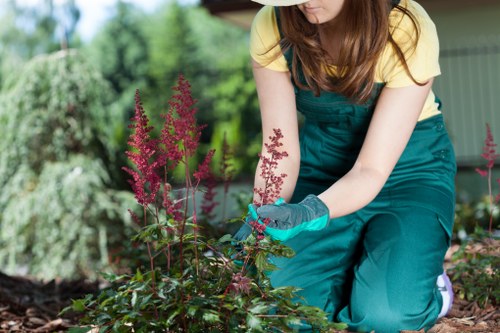 We work with local authorities and align our practices with the boroughs' approach to waste separation: garden and food waste collected separately, dry recyclables sorted into paper, plastics and cans, and glass managed through bottle banks or kerbside collections where available. This means our collection and sorting at source supports municipal systems, reducing contamination and improving overall recycling rates.
Local Transfer Stations and Practical Routes
Gardener Hayes uses a network of nearby transfer stations and composting facilities to keep transport distances short and emissions low. Our commonly used hubs include:
- Northside Transfer Station — for segregated timber and inert materials
- Riverside Organic Compost Hub — for green waste and woody chippings
- Central Reuse Depot — for reusable planters, bricks and salvageable materials
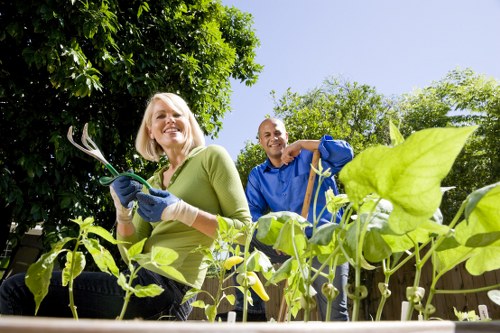 By routing waste to these facilities we reduce double-handling and ensure materials are processed in the most sustainable stream — composted, chipped for mulch, or prepared for recycling. We also collaborate with transfer stations on capacity planning during busy seasons so garden clearances don’t overwhelm local infrastructure.
To further cut transport emissions we employ route optimisation and batch pickups, which means fewer journeys and a smaller carbon footprint for our green waste logistics. Operational efficiency here directly supports our low-carbon objectives.
Partnerships with Charities and Community Reuse
Gardener Hayes has active partnerships with local charities and nonprofit organisations that extend the life of materials removed from sites. Through these collaborations, usable items and remaining soil are redirected to community projects. Our partners include local reuse groups such as GreenCycle Charity and the Community Garden Trust, which take surplus tools, pots, and healthy turf for community allotments and reuse schemes.
We also support social enterprises that upcycle timber and furniture salvaged during landscaping projects. Donated benches, raised beds and reclaimed stone find new homes in parks, schools, and social housing courtyards rather than going to landfill. This strengthens the circular economy in the borough and reduces waste handling costs.
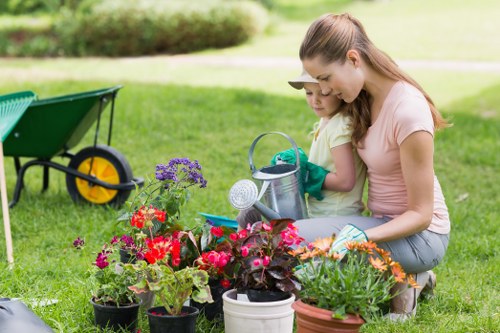 For smaller quantities we maintain a scheduled redistribution plan: good-condition soil is shared with community gardens, seeds and plants go to educational programmes, and broken yet repairable tools are supplied to training workshops. These efforts are part of our commitment to community-focused sustainable waste management.
 Transport is central to our sustainability story. Gardener Hayes operates a fleet of low-carbon vans — a mix of electric vehicles for local runs and Euro 6 low-emission hybrids for longer hauls. Our low-carbon vans are equipped with telematics to monitor fuel use and idling time, and they are charged using renewable electricity wherever possible. The fleet transition reduces our operational CO2 and supports quieter, cleaner neighbourhood activity during garden maintenance and clearances.
Operational choices in the garden also reflect sustainability: we prioritise on-site mulching and chipping to recycle cuttings immediately, reducing the volume that needs off-site processing. This sustainable rubbish gardening area concept turns trimmings into pathways, soil conditioners and erosion-control material, so waste becomes a benefit rather than a burden.
Internally, we set performance indicators for projects: recycling rates per job, percentage of material reused or donated, transport emissions per ton of waste, and compliance with local borough waste separation standards. These metrics drive continual improvement and transparency with stakeholders.
To support long-term change we invest in staff training on segregation best practices, composting techniques and safe reuse of reclaimed materials. Our teams are trained to sort at source, avoid contamination of recyclable loads, and identify items suitable for charitable donation or upcycling, which raises the overall efficiency of our eco-friendly waste disposal area.
We also test new sustainable products and processes — from biodegradable tree ties to electric chipper attachments — and pilot them on selected sites. Where pilots succeed we scale the practice across our operations so clients benefit from improved sustainability without compromising service quality.
Gardener Hayes is committed to a pragmatic, community-minded approach to recycling and sustainability. By combining clear targets, local transfer station partnerships, charity collaborations, and a low-emission transport fleet, we create an effective model for garden waste management that transforms a sustainable waste gardening area into an everyday reality for the borough.